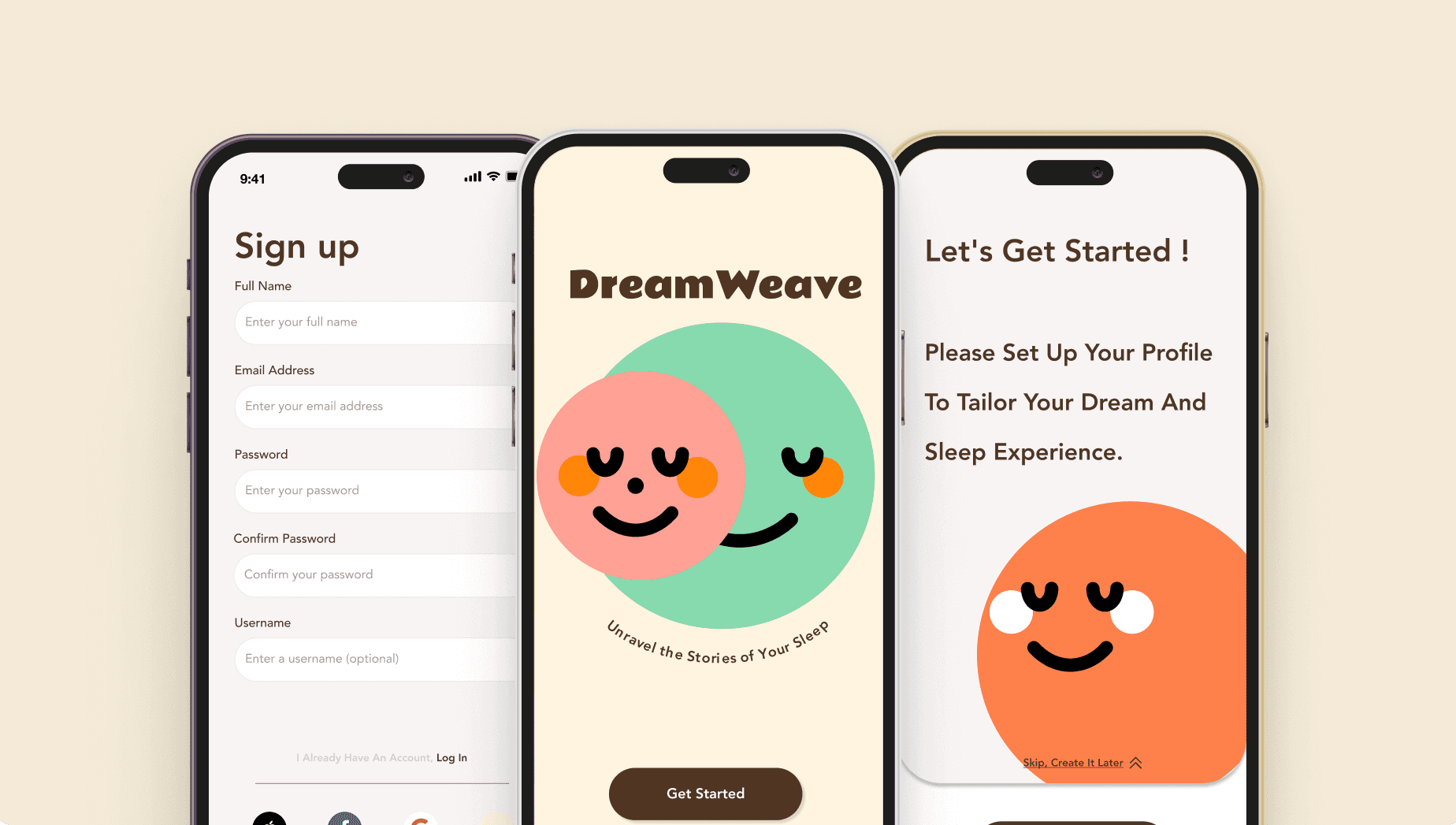
DreamWeave
A smart pillow with the app to enhance user's sleep experience by analyzing and interpreting the dream
Type
case study
Timeline
Jul - Dec 2023
Role
Role: UX + Product Design
Research
Concept Development
Design
Iteration
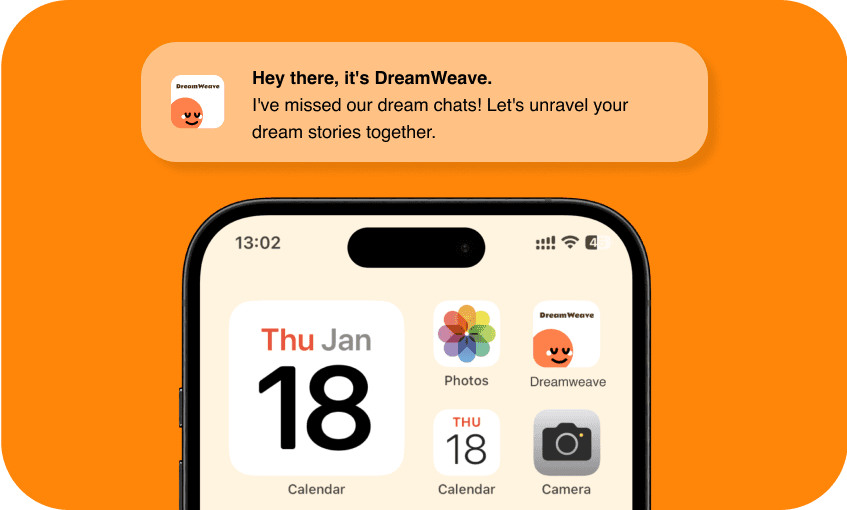
"DreamWeave posits that integrating sleep data analysis with dream interpretation will markedly improve sleep quality and emotional insight, fostering a deeper connection between well-being and the subconscious.‘
Dreams occur frequently (3–6 times/night) and influence emotional well-being.
Current sleep tracking tools rarely capture or interpret dreams.
Opportunity: Combine sensor-based data with dream recall/interpretation to uncover subconscious insights and improve mental health.
Problem
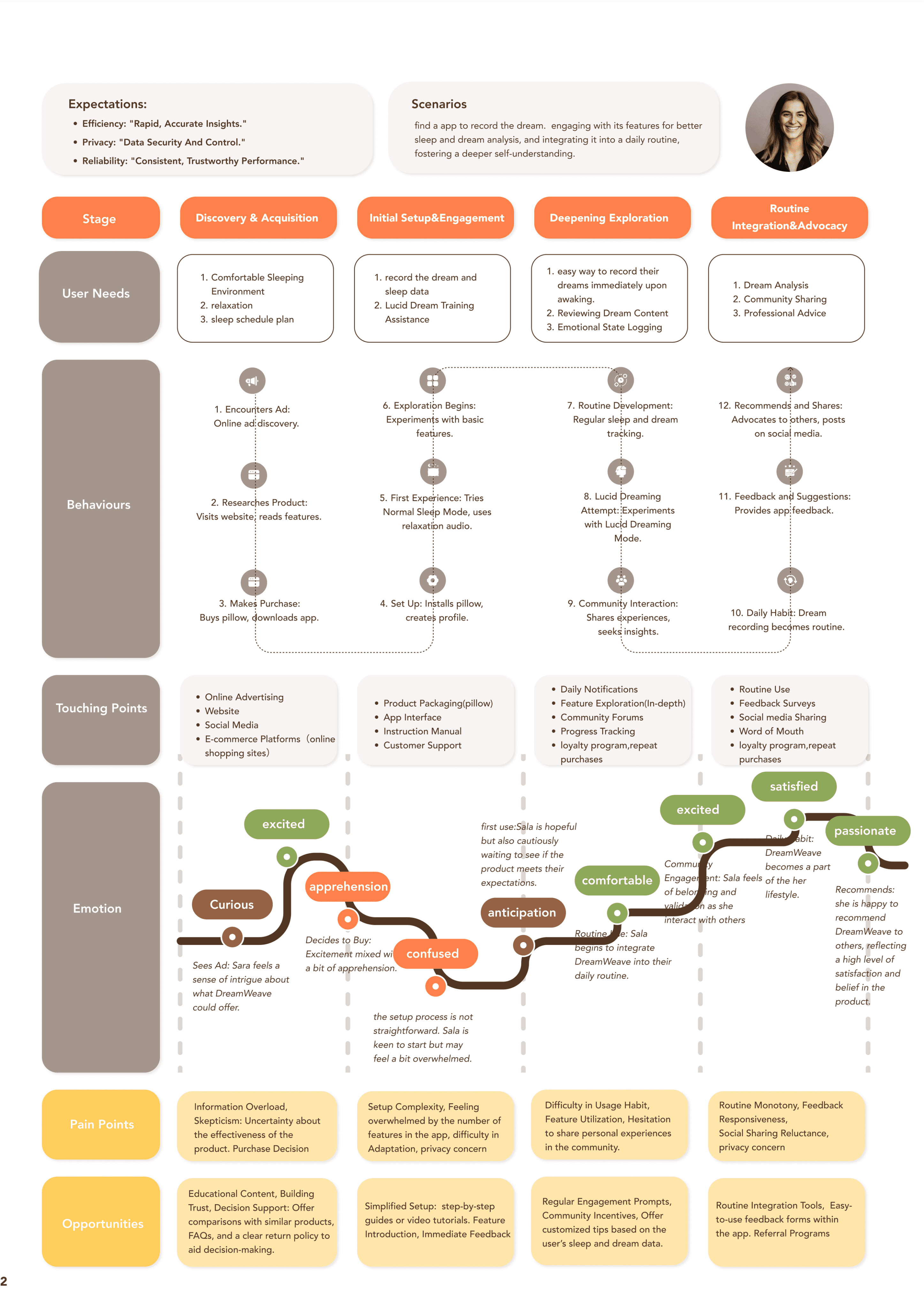
Users are fascinated by their dreams but struggle to recall or make sense of them.
Existing tools focus on sleep stages, not the emotional/psychological meaning.
Gap: No accessible way to integrate dream recall with personal wellness.
Goal
Help users capture, analyze, and reflect on dreams.
Bridge sleep tracking data with emotional interpretation, fostering self-awareness and well-being.
Research
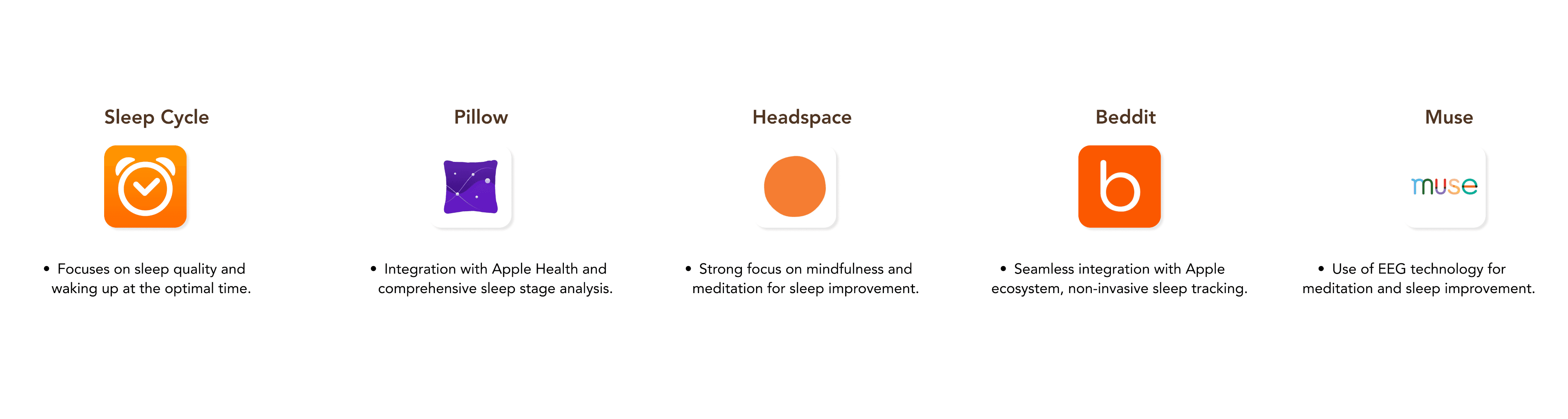
Market scan (sleep trackers, dream journals).
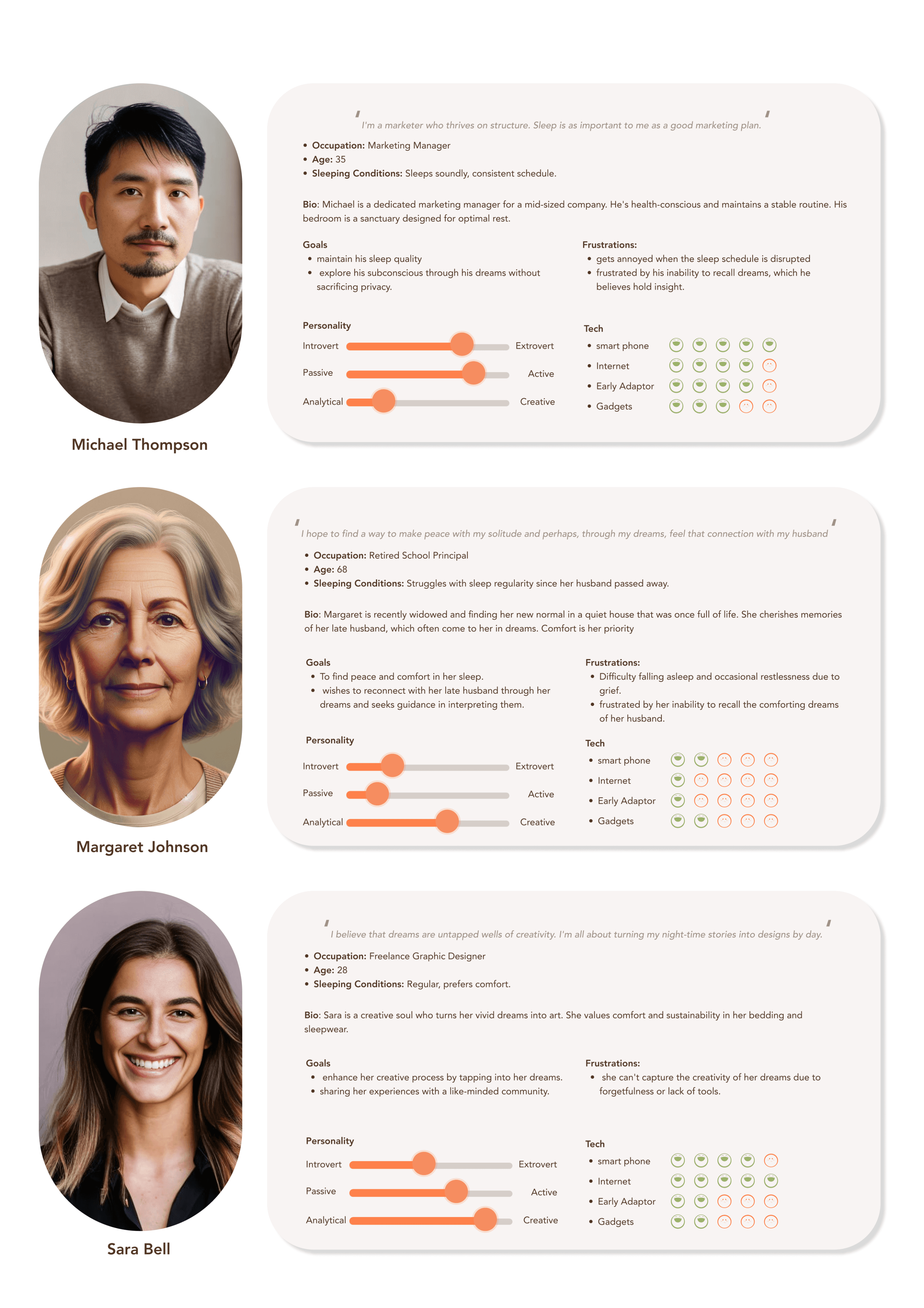
User interviews → confirmed high interest but low consistency in recall.
Insights: People want both data-driven credibility + personal meaning.



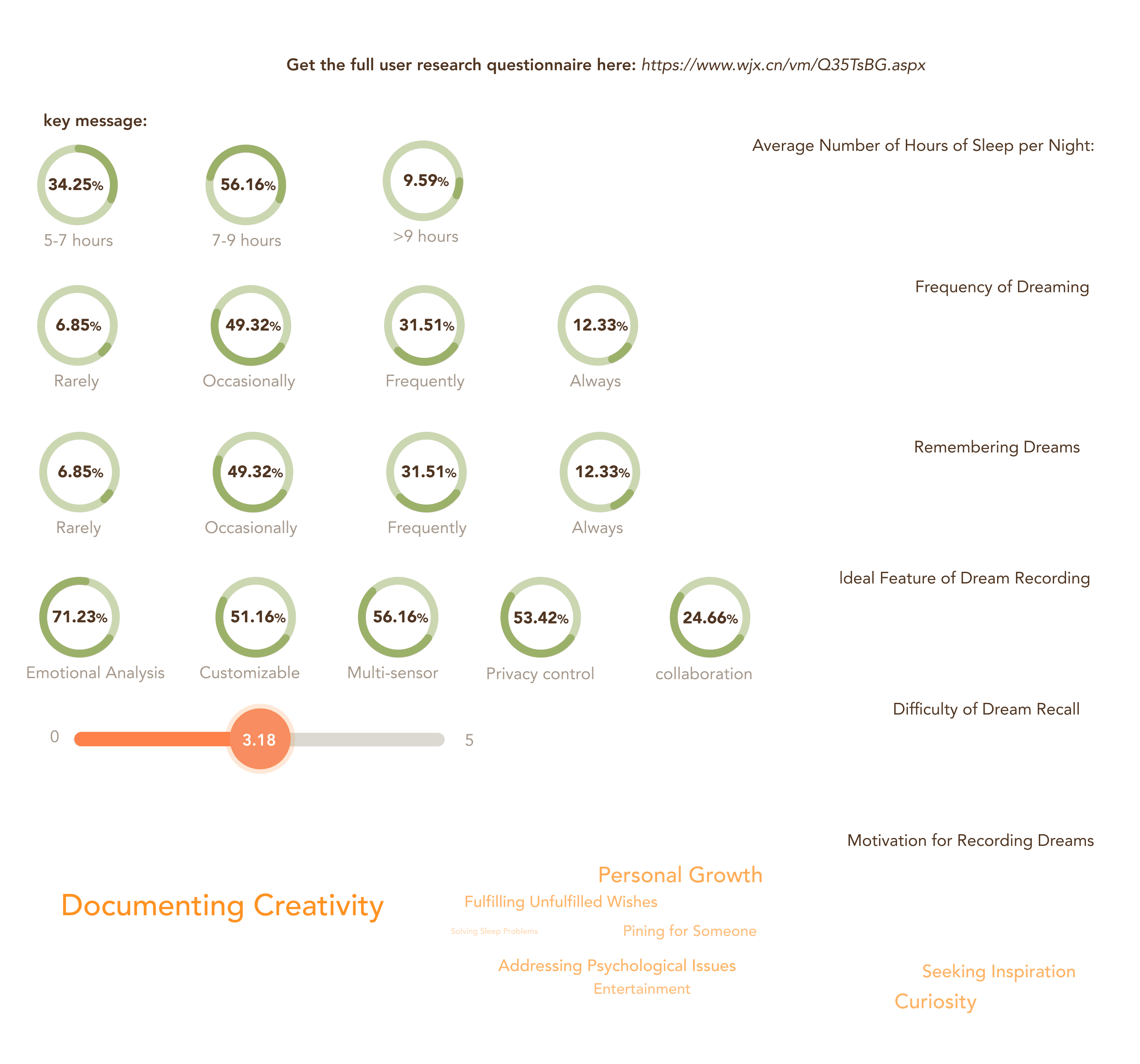
Get the full user research questionnaire here: https://www.wjx.cn/vm/Q35TsBG.aspx
Concept Development
Defined MVP: pillow sensor + companion app.
Focus on dream recall nudges + daily reflection prompts.
Key Features
Sensor-enabled pillow (records sleep patterns tied to dream phases).
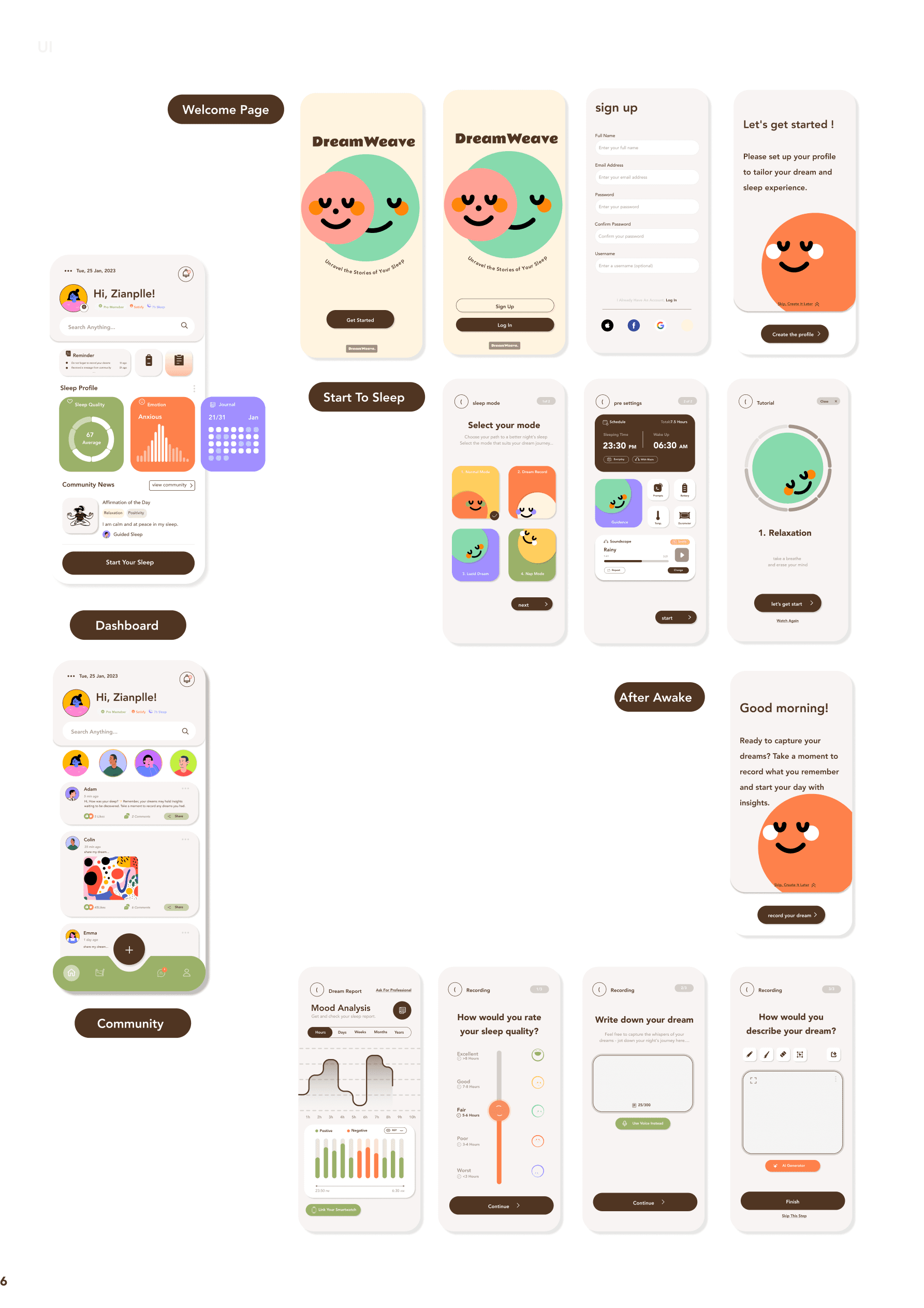
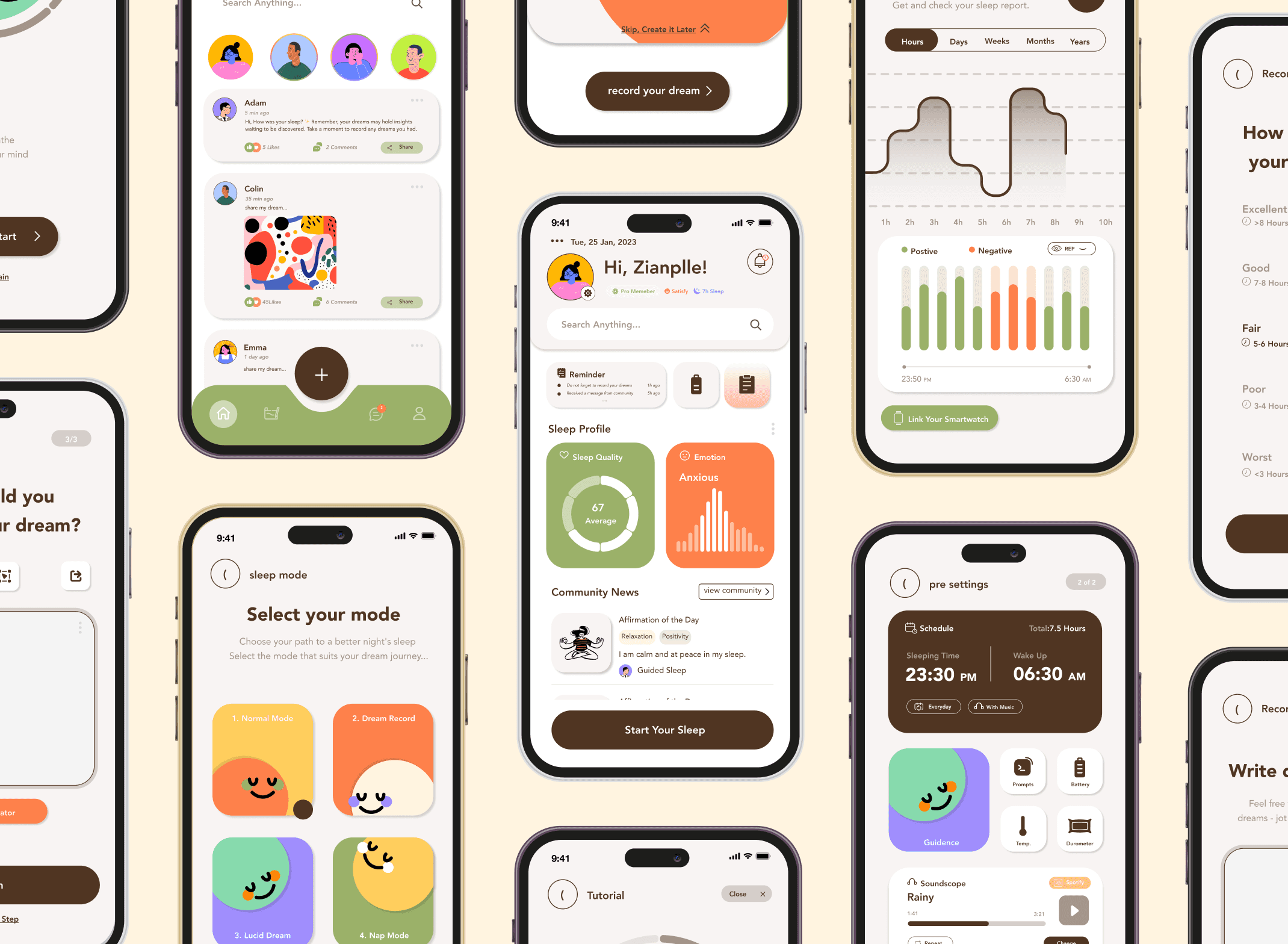
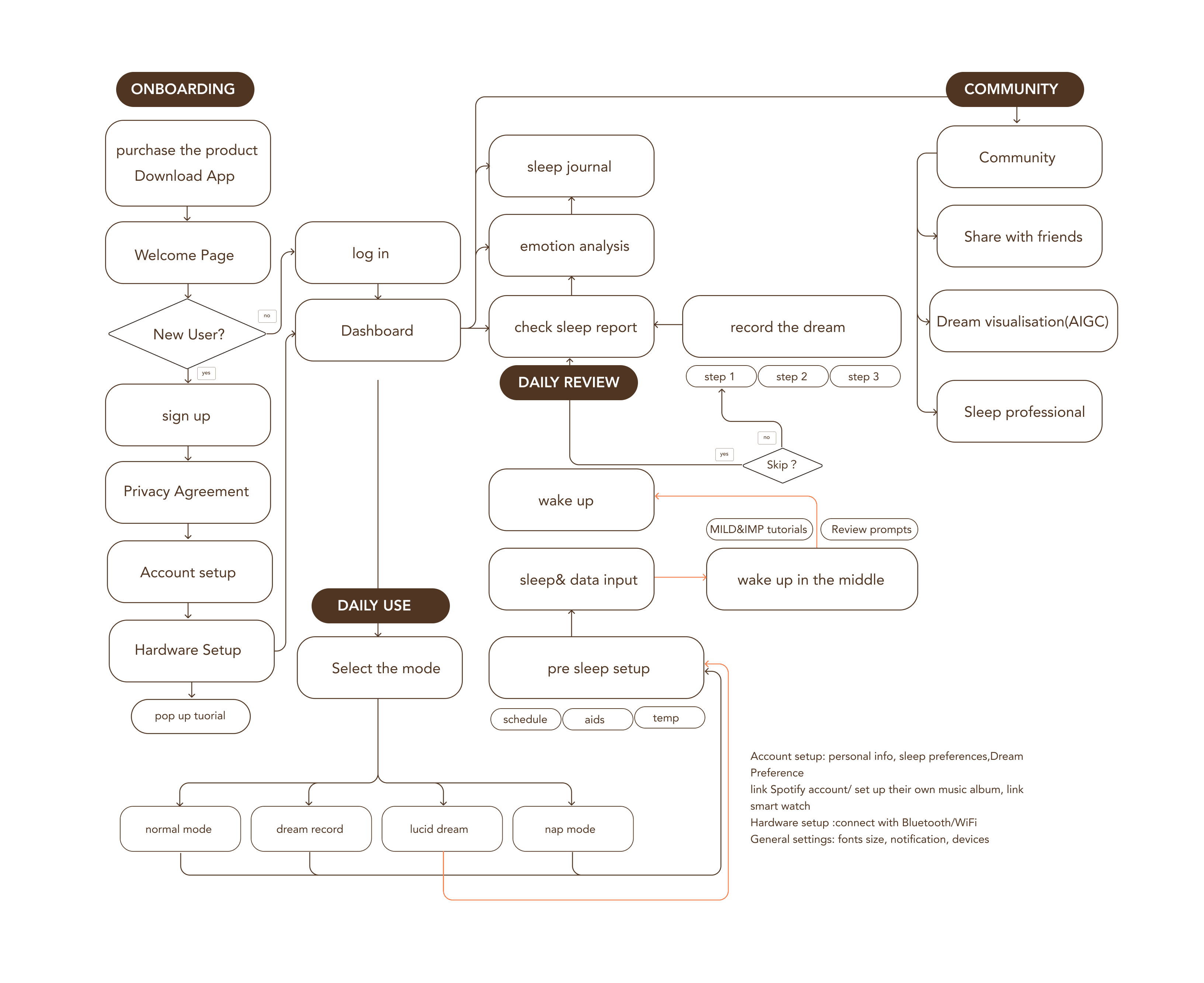
Dream logging app (voice/text journaling, visualization).
Emotional insight dashboard (links dream content with mood and sleep quality).
Design
UX: Dream logging, emotional tagging, visualization.
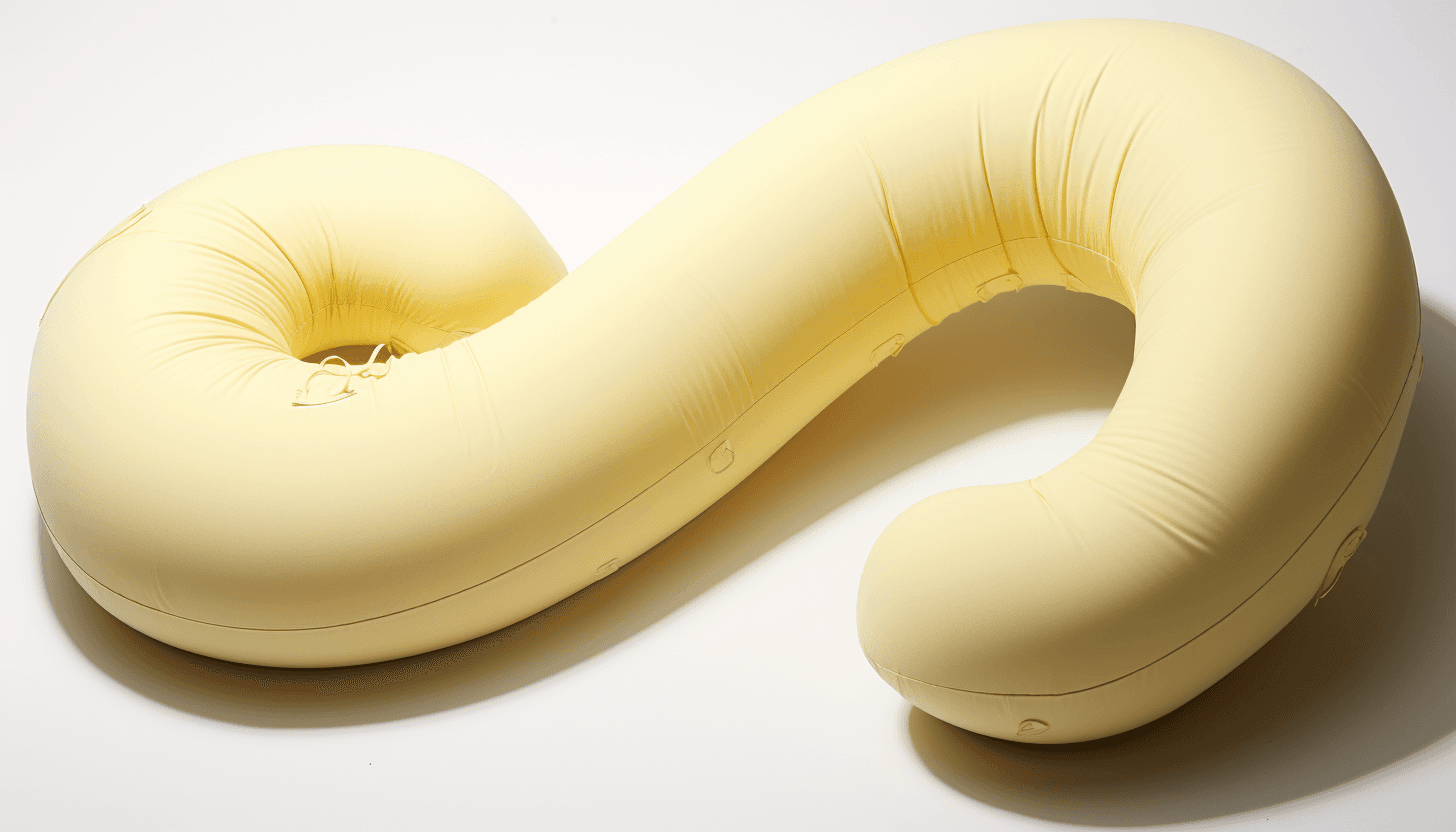
Product design: Ergonomic smart pillow prototype.
Interaction: Micro-animations + guided journaling flow.
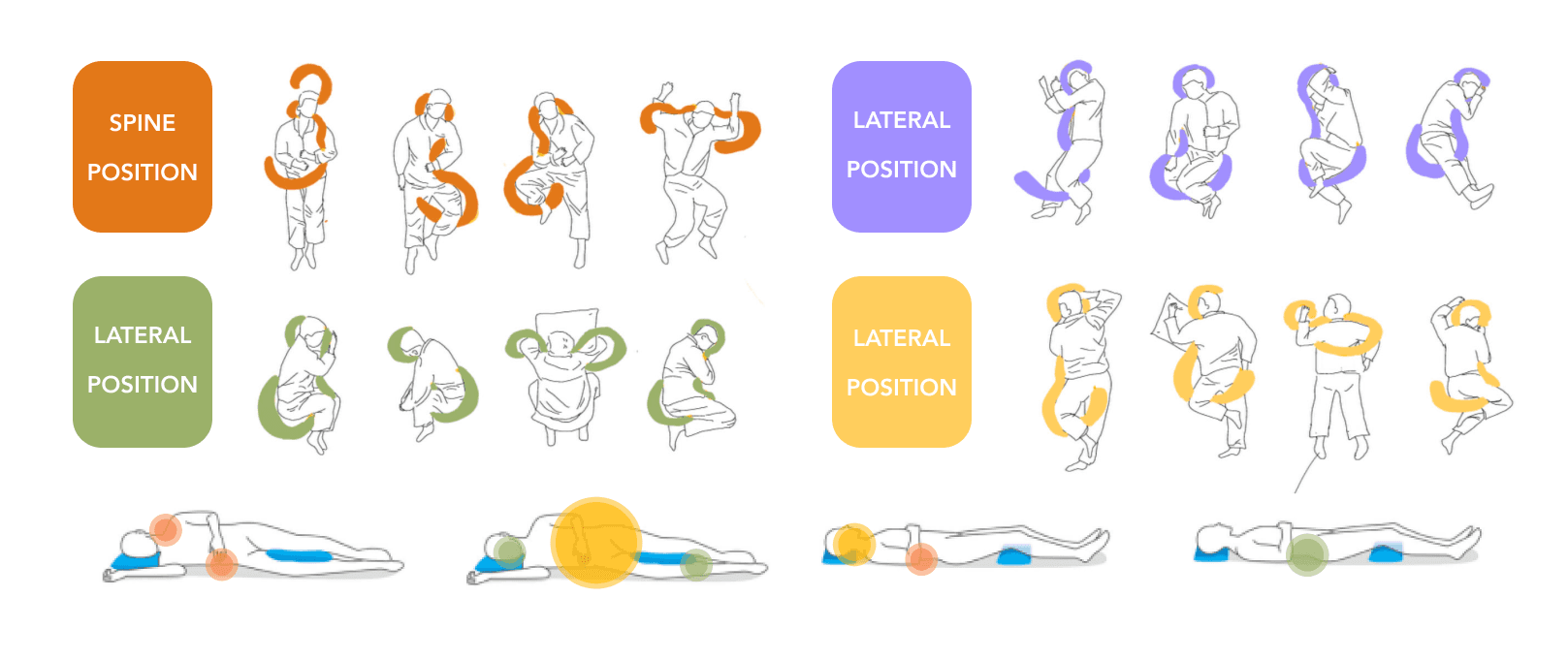
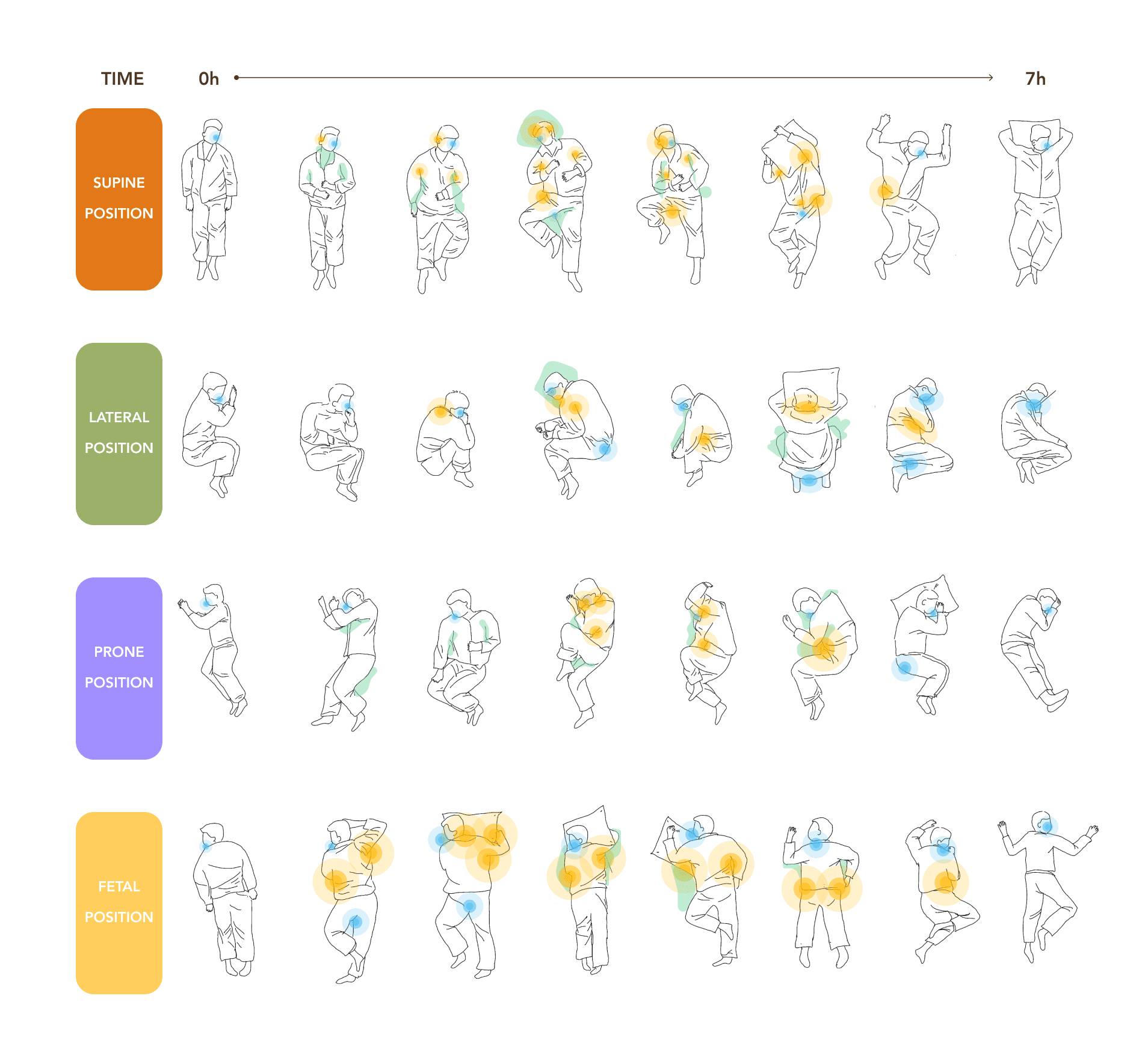
By studying various sleeping positions including Spine, Lateral, and Fetal, I sketched out the body's contours and pressure points in each posture. This ergonomic research informed the design of the DreamWeave pillow, leading to a prototype that adapts seamlessly to different sleeping styles for optimal support and comfort
Sleeping Timeline
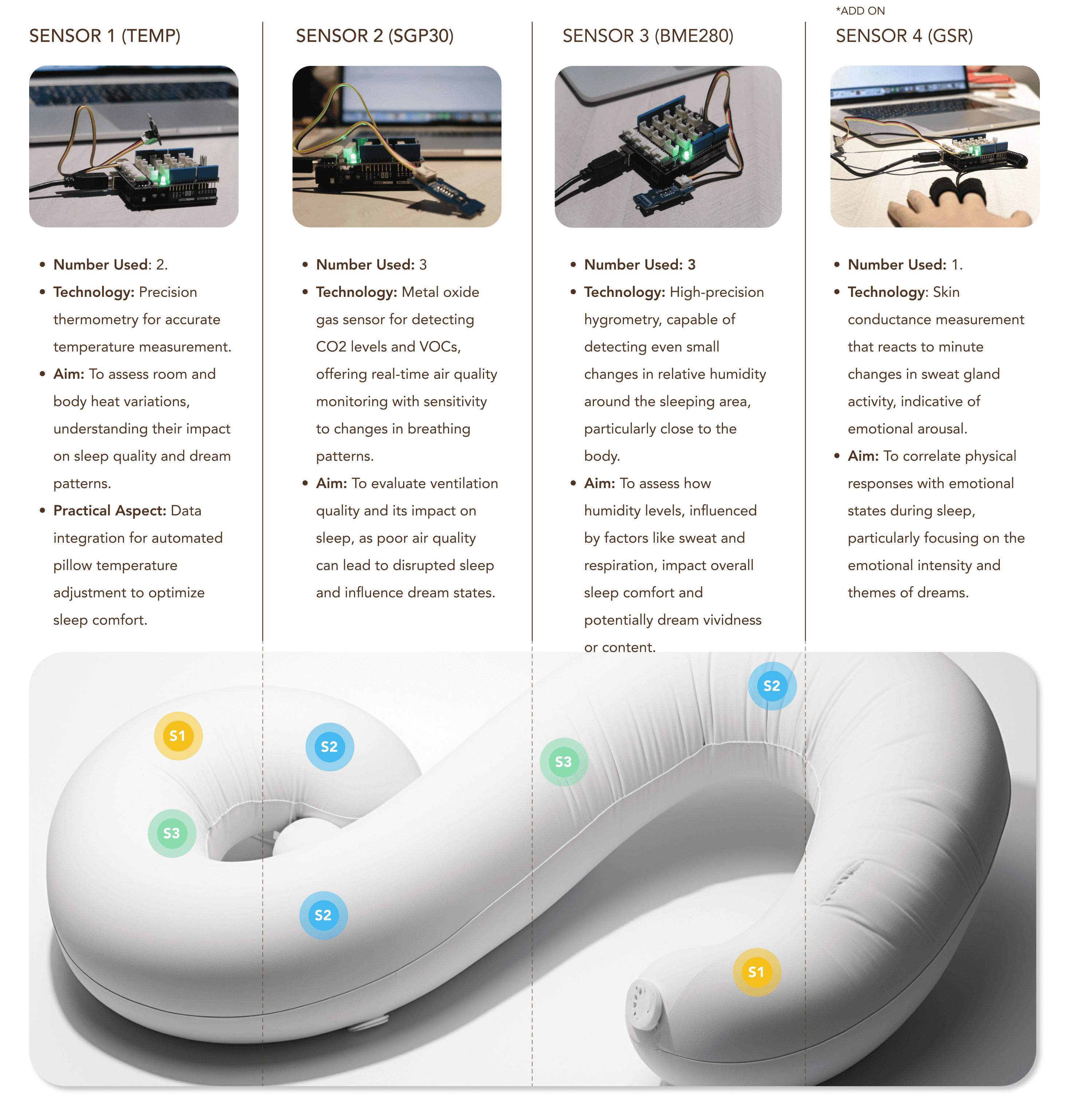
This diagram illustrates the optimal placement of temperature, humidity, and CO2 sensors in relation to a user's changing positions during sleep. It aims to identify the most effective locations for each sensor to accurately capture environmental and physiological data throughout the night.
Design System
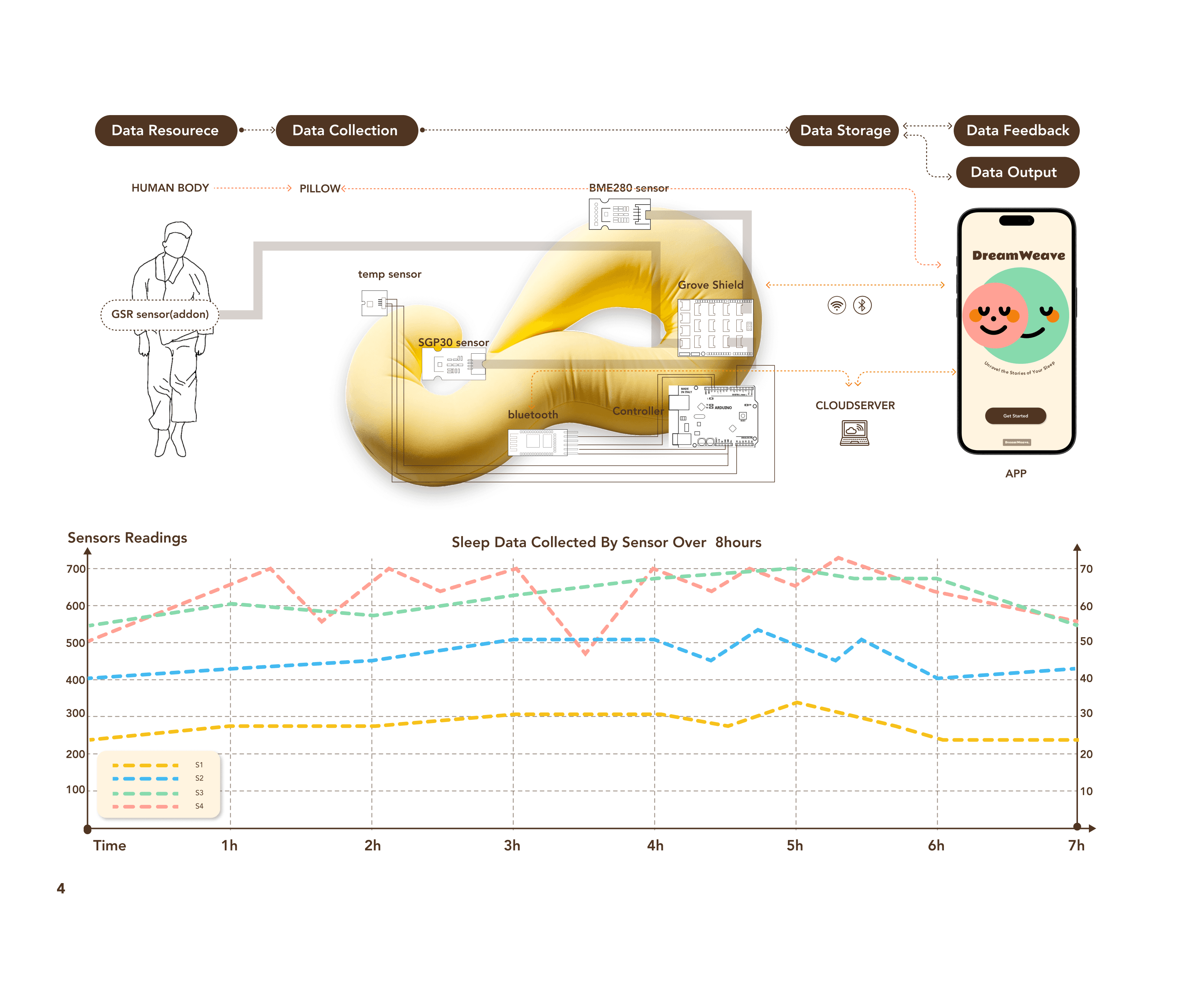
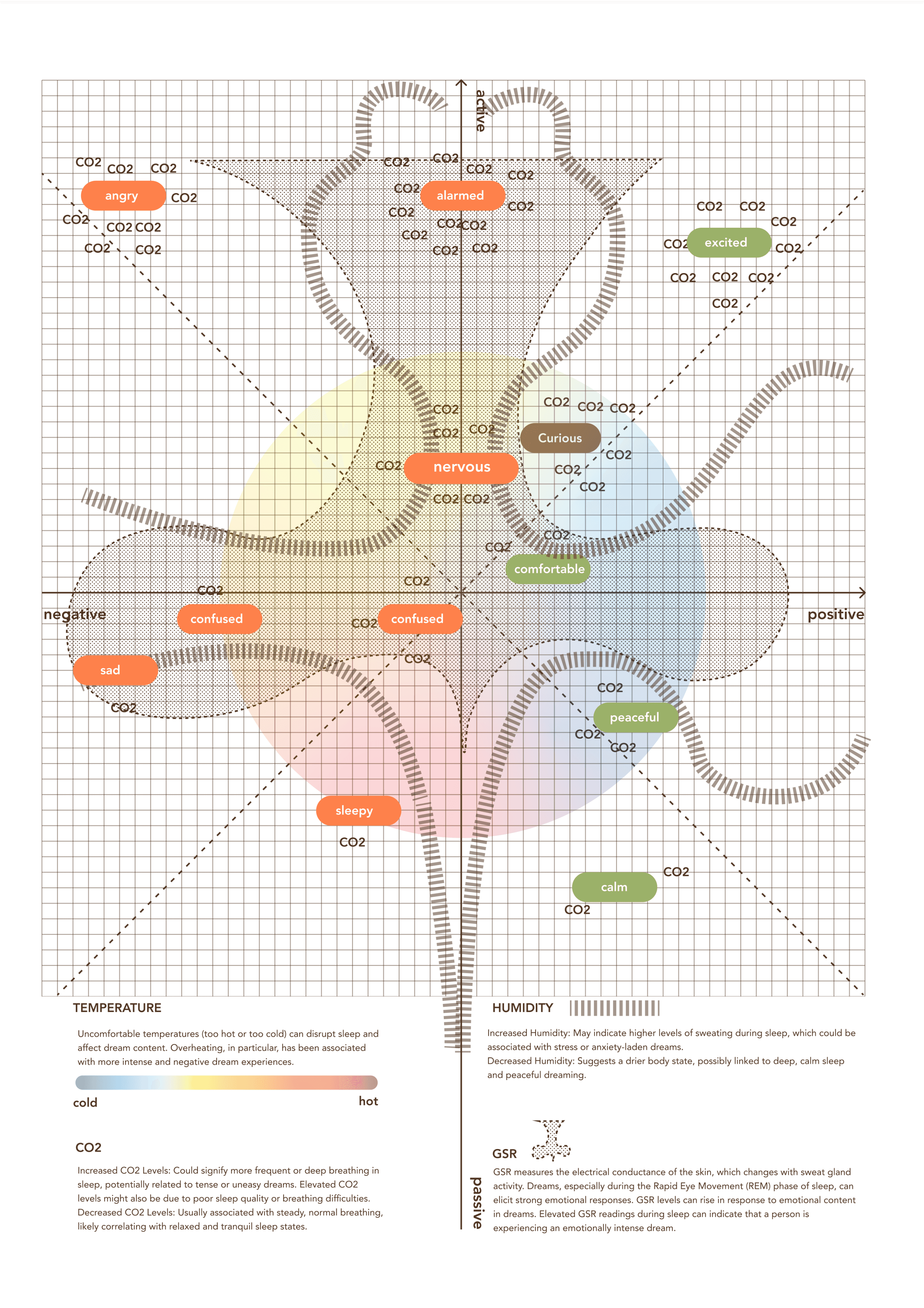
Data Analysis
Emotional Analysis
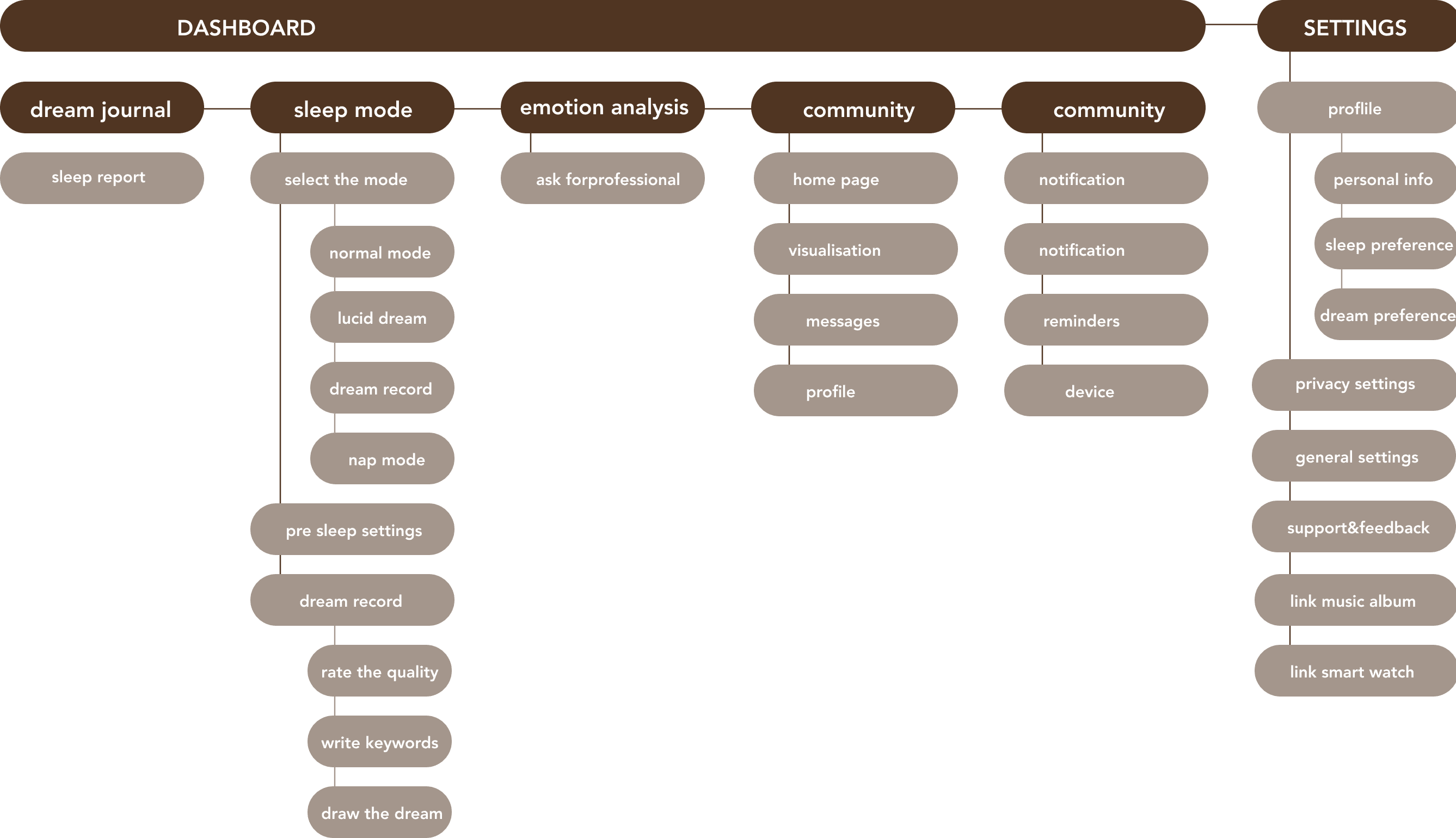
IA&Wireframe
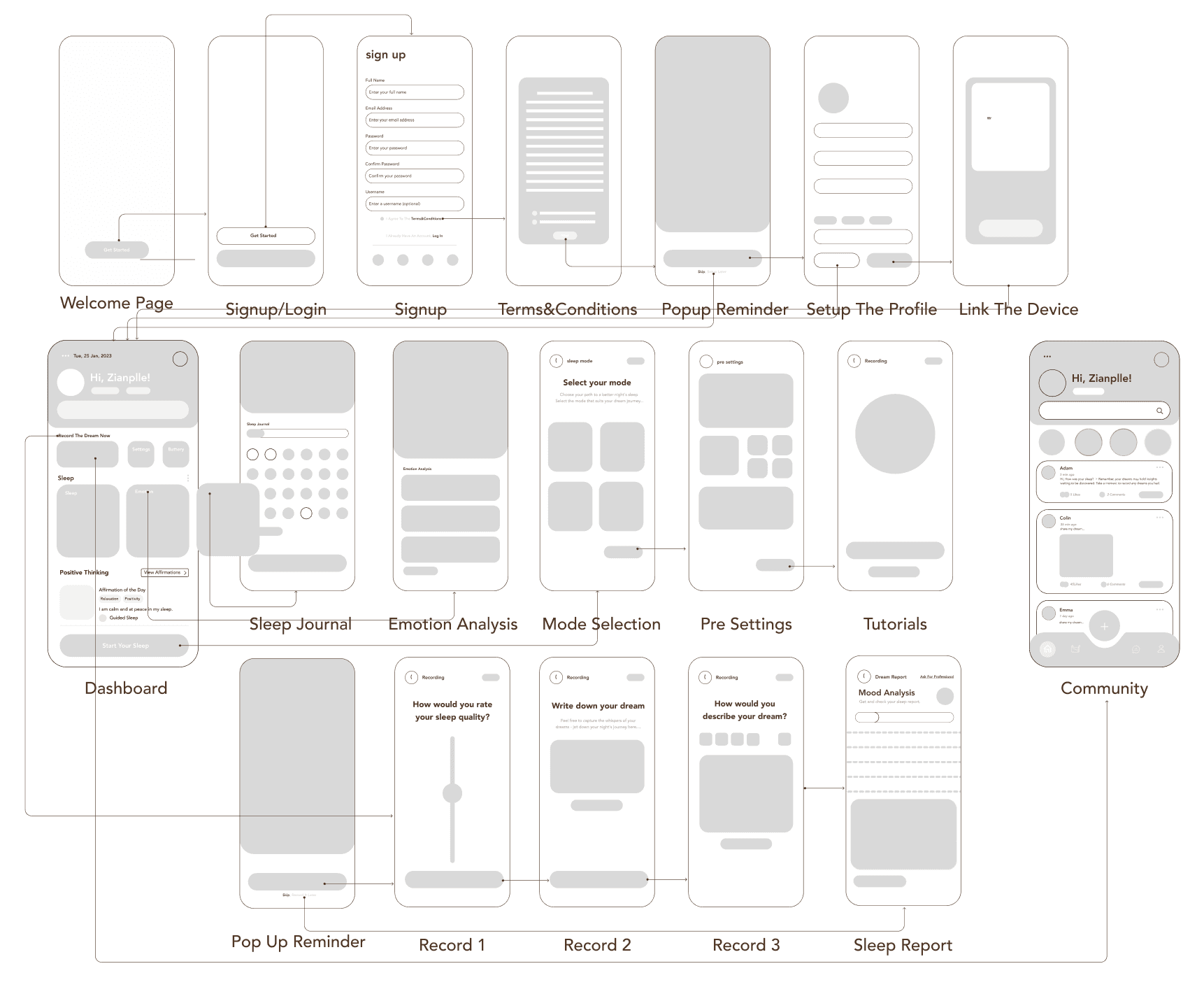
Iteration
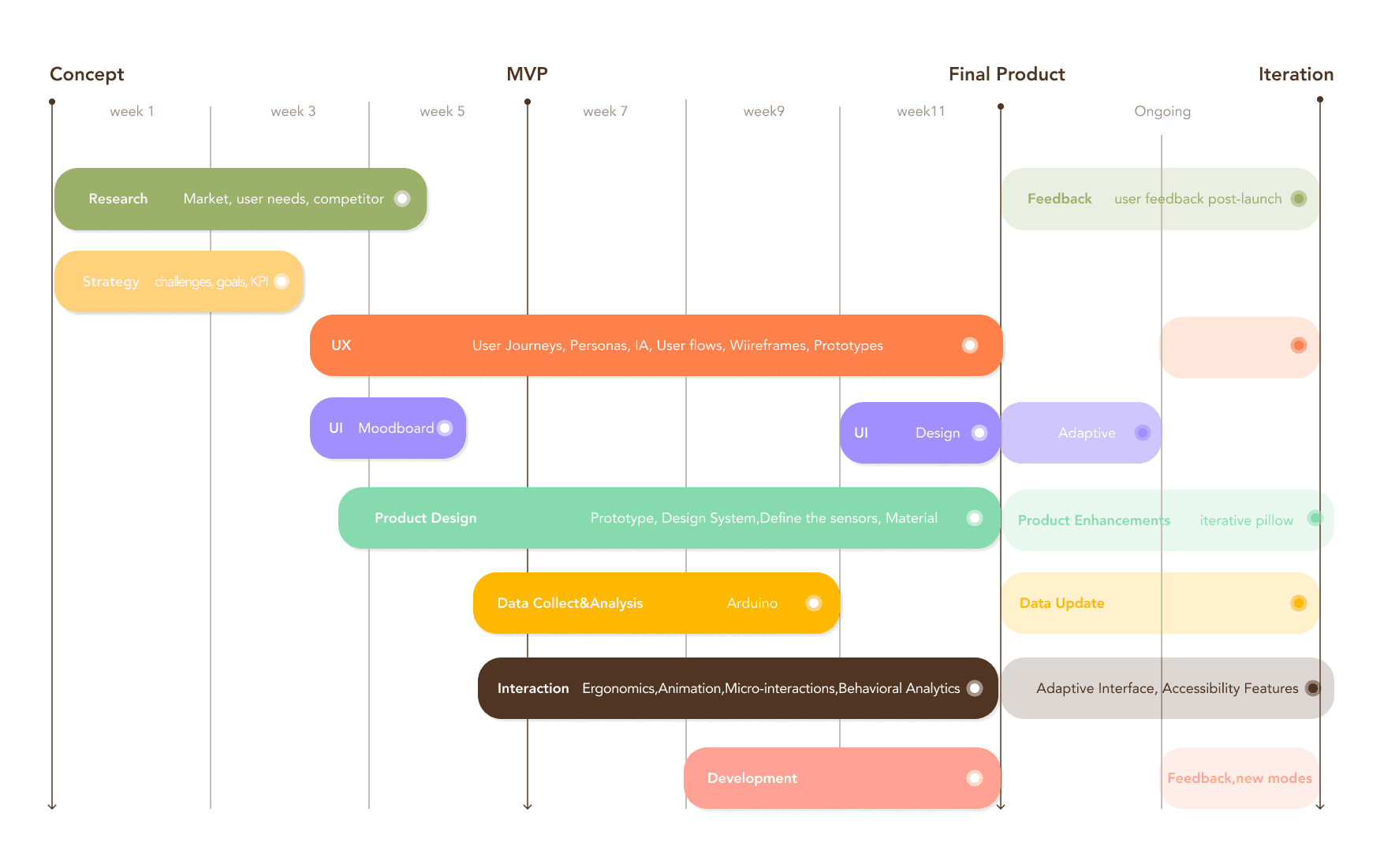
Feedback cycles led to: adaptive interface, accessibility features, iterative hardware updates.